
A targeted employment area, or TEA, is a location where an EB-5 project qualifies for the lower minimum capital investment of $800,000 instead of $1,050,000. The designation exists because Congress built the EB-5 immigrant investor program to direct foreign capital toward the places that need it most: rural communities and areas struggling with high unemployment. For the full breakdown of what that investment includes beyond the capital itself, see our EB-5 cost guide.
For an EB-5 investor, TEA status is the single most consequential fact about a project’s location. It determines how much capital you must commit, which visa queue you enter, and in many cases how quickly you reach a green card. A $250,000 difference in required investment is only the beginning of what turns on it. TEA status is also one of the core EB-5 requirements every investor has to satisfy before a petition can move forward.
This page explains how the two TEA categories work, how TEA qualification is calculated and documented, how to check a location using a TEA mapping tool, and what to watch for before you commit capital to a project in a designated TEA. For the full picture of how TEA status fits into EB-5 eligibility, see our complete guide to the EB-5 visa.
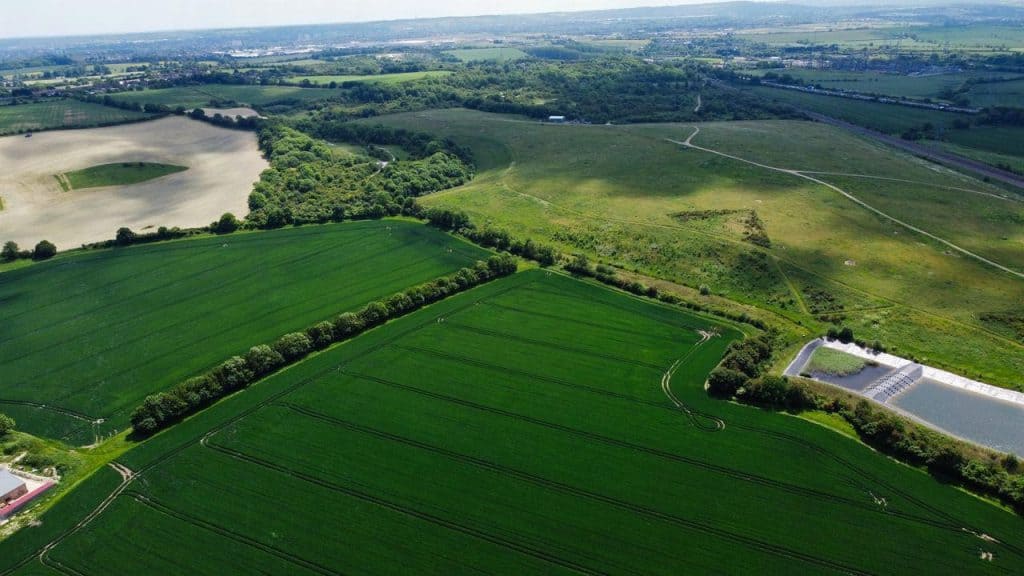
A project qualifies as a rural TEA when its location satisfies both of these conditions:
Rural TEA status is a matter of geography and population data rather than economic conditions, which makes it comparatively stable. An area’s rural qualification does not shift when the labor market moves. That stability is a real advantage: a rural location that qualifies today will very likely still qualify when your petition is adjudicated.
Rural projects also carry two benefits beyond the lower investment amount. They receive 20% of the annual EB-5 visa allocation through the rural set-aside, roughly double the share reserved for high unemployment projects, and USCIS gives rural I-526E petitions priority processing. For investors weighing timeline as heavily as cost, this combination is why rural has drawn the majority of recent EB-5 activity. See our EB-5 rural set-aside page for how that visa reservation works and what it means for your timeline.
High unemployment TEAs are determined statistically rather than geographically, and the calculation is more involved than it first appears.
The threshold. The area must show an unemployment rate of at least 150% of the national average unemployment rate. If the national rate is 4.0%, the qualifying threshold is 6.0%. Because the national average moves, the threshold moves with it, and an area that qualified last year may not qualify this year.
The geography. The analysis starts at the census tract where the new commercial enterprise is principally doing business. The process runs in two steps:
The contiguity rule is strict. Tracts must physically share a border with a tract already in the group. You cannot skip over intervening areas to reach a distant tract with higher unemployment. This is a deliberate tightening of the pre-2022 framework, when states could certify sprawling tract combinations, a practice widely criticized as gerrymandering. Best practice today is to add only as many adjacent tracts as are actually needed to clear the threshold, since including more than necessary invites scrutiny.
The data. Unemployment figures come from federal sources: the Bureau of Labor Statistics Local Area Unemployment Statistics (LAUS) program and the Census Bureau’s American Community Survey (ACS). USCIS expects the data to be current, internally consistent, and drawn from the official source, with the national unemployment rate measured over the same period as the local rate.
One consequence of the statistical approach is worth understanding: high unemployment TEA status is a snapshot, not a permanent boundary. Census tracts near university campuses, for instance, frequently qualify because students work part time or not at all, even though those neighborhoods are often well developed. Qualification reflects the numbers, not the visible condition of the area.
Before March 15, 2022, state governments issued TEA designation letters and USCIS generally deferred to them. The EB-5 Reform and Integrity Act ended that arrangement. Only the Department of Homeland Security, through U.S. Citizenship and Immigration Services, can now designate a high unemployment area. The RIA explicitly bars other federal, state, and local officials from making the determination.
This changed the practical mechanics for investors in two ways.
There is no advance TEA letter to rely on. Instead of presenting a state certification, the petitioner must submit the underlying evidence: the census tract analysis, the unemployment data with its source and date, and the calculation demonstrating the 150% threshold is met.
Designation is confirmed at adjudication. USCIS assesses TEA qualification when it reviews the investor’s Form I-526E petition, or earlier when a project seeks approval of its Form I-956F. That means TEA status is not truly settled until USCIS rules on it, which can be many months after you invest. A high unemployment designation, once granted, is valid for two years and can be renewed in two-year increments.
The date that governs is the time of investment or the time of filing, so a location must qualify then. Investors who filed before a data change are generally measured against the rules and figures in effect when they filed.
A common misconception is worth clearing up directly: USCIS does not publish an official TEA map. There is no government tool that returns a binding TEA determination for an address. USCIS makes that call only when it adjudicates a petition.
What exists instead are third-party TEA mapping tools, built by economists and industry organizations from the same BLS and Census Bureau data USCIS relies on. The most widely used include the mapping tool published by Invest In the USA (IIUSA), the TEA Finder app developed by Impact DataSource with EB5 Investors Magazine, and maps maintained by several regional center operators. Each generally lets you enter a project address and returns whether the location appears to qualify, along with the tract-level unemployment data and, in most tools, an automatically optimized combination of adjacent census tracts.
These tools are genuinely useful for early diligence, and any serious EB-5 investor should know how to use one. Two caveats apply:
The practical takeaway is that a TEA map tells you where a location stands today. What protects an investor is documentation that was current and correctly calculated at the moment of filing.
The $250,000 saving is the most visible benefit of a TEA investment, but for many investors it is no longer the most important one.
The RIA reserved 32% of the annual EB-5 visa supply for TEA and infrastructure categories: 20% for rural, 10% for high unemployment, and 2% for infrastructure. These reserved categories sit in their own queues, separate from the unreserved category where investors from China and India face substantial backlogs. As of mid-2026, all three set-aside categories remain current for every country.
That makes TEA selection a timeline decision as much as a cost decision. For an investor born in a backlogged country, choosing a project in a designated TEA can be the difference between moving forward on petition approval and waiting years for a visa number. Rural carries the larger reservation and priority processing; the high unemployment set-aside is smaller and, with demand rising, is more likely to develop a wait first.
For a fuller picture of how these queues interact with processing times, see our EB-5 process page, and for the rural category specifically, our EB-5 rural set-aside page.

TEA issues are a recurring source of Requests for Evidence, and they cluster around a few predictable problems:
There is also a structural risk specific to high unemployment TEAs. Because designation is verified at adjudication and unemployment data updates periodically, a project marketed as a TEA can see its statistical footing change between the investor’s decision and USCIS review. This is not a reason to avoid high unemployment projects. It is a reason to ask a sponsor precisely how the TEA analysis was performed, by whom, on what data, and as of what date.
Responsibility for establishing TEA qualification sits with the petitioner either way, but the practical burden differs sharply.
In a regional center investment, the sponsor commissions the TEA analysis, typically from an independent economist, and supplies the supporting documentation to investors. Where the project has filed Form I-956F, the TEA showing is made at the project level and reviewed by USCIS there, which gives investors meaningful visibility before they commit.
In a direct investment, the investor bears the full burden of commissioning the analysis and assembling the evidence for their own I-526 or I-526E petition, without the benefit of a project-level review.
This is one of several reasons most EB-5 investors choose the regional center route. Our direct investment vs. regional center comparison covers the broader tradeoffs.
FlexPath is an investment-first EB-5 sponsor, and TEA qualification is exactly the kind of detail where that orientation shows. A TEA designation is not a marketing label to be asserted; it is an evidentiary position that has to hold up when USCIS reviews it, sometimes a year or more after an investor commits capital.
That means treating the TEA analysis as diligence rather than decoration: independent economic work, current federal data, a documented methodology, and a clear-eyed view of whether a location’s qualification is durable or vulnerable to the next data release. It also means being straightforward with investors about which category a project falls into and what that implies for their visa queue.
If you are evaluating a project and want to understand how its TEA status was established, that is a conversation worth having before you sign anything.
A TEA is a location where an EB-5 project qualifies for the reduced $800,000 minimum investment instead of $1,050,000. A location qualifies either as a rural area or as a high unemployment area with an unemployment rate at least 150% of the national average.
No. USCIS does not publish a TEA map or issue advance determinations. Several third-party TEA mapping tools, built from BLS and Census Bureau data, let you check whether an address appears to qualify, but USCIS makes the actual determination when it adjudicates the I-526E petition or the project’s I-956F.
Start with the census tract where the enterprise is principally doing business. If that tract’s unemployment rate is at least 150% of the national average, it qualifies. If not, directly contiguous tracts may be added and a weighted average calculated, using BLS Local Area Unemployment Statistics and American Community Survey data.
A rural area is outside any metropolitan statistical area as designated by the Office of Management and Budget, and outside the boundary of any city or town with a population of 20,000 or more per the most recent decennial census.
A high unemployment designation is valid for two years from the time of investment or filing and can be renewed in two-year increments. Rural qualification is based on geography and population rather than economic data, so it is considerably more stable.
A high unemployment area can, because qualification depends on unemployment data that updates periodically. The TEA map shifted on May 19, 2026 when delayed BLS data was released. What governs your petition is whether the location qualified, with proper documentation, at the time you invested and filed.
No. Since March 15, 2022, only the Department of Homeland Security through USCIS can designate a high unemployment area. State TEA certification letters no longer carry the weight they did under the pre-RIA framework.

